

Is Your Business More Profitable Than It Was Six Months Ago?
- SimpliBookkeeping
- Aug 7
- 4 min read
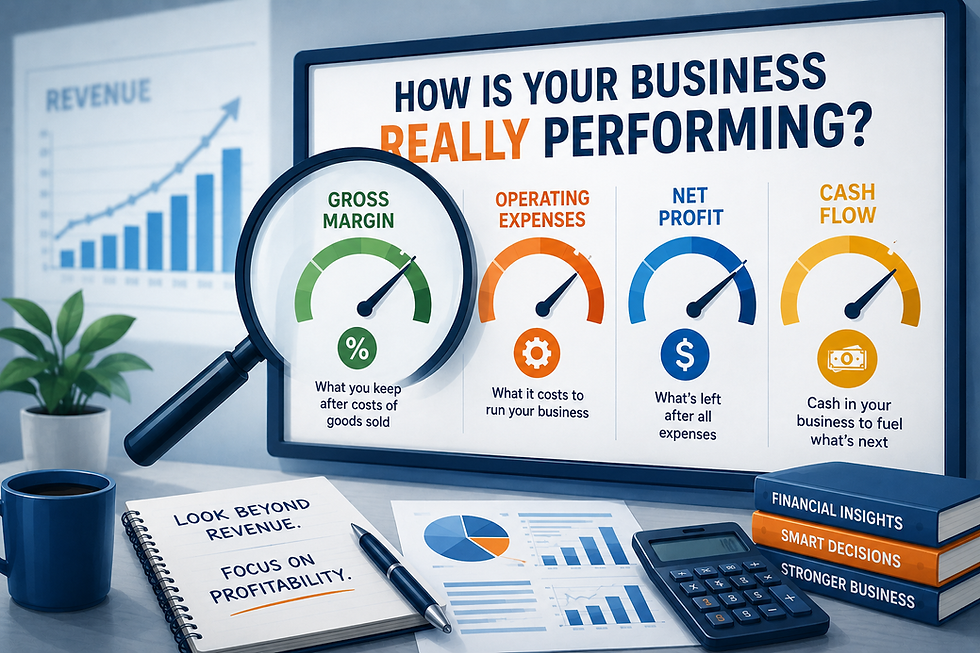
As businesses move through the second half of the year, many owners naturally compare this year's revenue to last year's. Revenue is easy to measure and often becomes the primary indicator of success. However, higher sales do not automatically translate into stronger financial performance. A business can generate more revenue while earning less profit if operating costs, payroll, or direct expenses have increased at a faster rate.
A mid-year business review provides an opportunity to look beyond top-line growth and evaluate the financial metrics that have the greatest impact on long-term success. According to the National Federation of Independent Business, labor costs and operating expenses remain among the most significant challenges facing small businesses in 2026. Reviewing profitability instead of revenue alone helps owners understand whether the business is becoming more efficient or simply becoming busier.
One of the most valuable metrics to compare is gross margin. Gross margin measures how much revenue remains after direct costs associated with delivering products or services have been deducted. It provides insight into pricing effectiveness, labor efficiency, and the impact of vendor cost increases. If revenue has increased but gross margin has declined, the business may be producing more work while retaining less profit from each sale.
Many factors can contribute to shrinking gross margins. Material costs may have increased, payroll expenses may have grown, or pricing may not have kept pace with rising operating costs. Comparing gross margin percentages from six months ago to current results often reveals trends that total revenue cannot. Businesses that monitor gross margin regularly are generally better positioned to adjust pricing strategies before profitability begins to decline.
Operating expenses deserve the same level of attention. Insurance premiums, software subscriptions, marketing expenses, professional services, and payroll taxes have continued increasing across many industries. Individually, these costs may appear manageable. Combined, they can gradually reduce net income if spending grows faster than revenue. Reviewing operating expenses as a percentage of revenue allows business owners to determine whether overhead remains aligned with business growth.
Net profit provides another important measure of financial performance because it reflects the amount of income remaining after all business expenses have been paid.
Comparing net profit from the first half of the year to current results can reveal whether the business is converting additional sales into meaningful financial gains. A growing business should ideally generate stronger profits alongside higher revenue. If profit remains unchanged while revenue increases, additional analysis may be needed to determine where margins are being lost.
Cash flow should also be included in every mid-year financial review. A profitable business can still experience financial strain if customer payments slow or operating expenses require significant cash before revenue is collected. Reviewing the Cash Flow Statement alongside the Profit and Loss Statement helps determine whether profits are translating into healthy business liquidity. According to the Association for Financial Professionals, cash flow forecasting remains one of the most effective tools for identifying potential liquidity challenges before they disrupt operations.
Accounts receivable trends often provide valuable insight during this review. Higher sales frequently produce larger outstanding invoice balances. If customers are taking longer to pay, available cash may become tighter even while reported revenue continues increasing. Reviewing receivable aging reports allows businesses to identify collection issues early and improve working capital management before overdue balances begin affecting daily operations.
Business owners should also evaluate whether recent investments are producing measurable financial results. Hiring additional employees, purchasing equipment, increasing advertising, or expanding technology platforms all represent investments intended to improve future performance. Mid-year provides an appropriate time to compare these expenditures against actual business results. Reviewing revenue growth alongside profitability and cash flow helps determine whether these investments are delivering the expected return.
Financial key performance indicators can strengthen this review even further. Gross profit margin, operating expense ratio, accounts receivable turnover, and current ratio all provide valuable insight into financial health. Rather than focusing on a single month's performance, comparing these indicators over the past six months often reveals meaningful trends that support better decision making. Consistent KPI monitoring has become a central component of financial management because it provides objective measurements of business performance throughout the year.
Forecasting also deserves attention during a mid-year review. Budgets created at the beginning of the year may no longer reflect current operating conditions. Changes in labor costs, customer demand, financing expenses, or vendor pricing can significantly alter financial projections. Updating revenue forecasts, expense estimates, and expected cash flow allows businesses to adjust hiring plans, capital expenditures, and pricing strategies before year-end.
Businesses that perform regular profitability analysis often identify opportunities that would otherwise remain hidden. Small improvements in gross margin, expense management, or customer collections can produce meaningful gains over the remainder of the year. Addressing these areas during mid-year allows sufficient time to improve financial performance before annual results are finalized.
Revenue growth remains an important measure of success, but it tells only part of the story. Gross margin, operating expenses, net profit, and cash flow provide a more complete picture of financial health. Businesses that compare these metrics regularly gain stronger financial visibility, improve forecasting accuracy, and make better decisions that support long-term profitability rather than simply higher sales.


Comments