

How Inflation Still Shows Up in Your Financial Statements
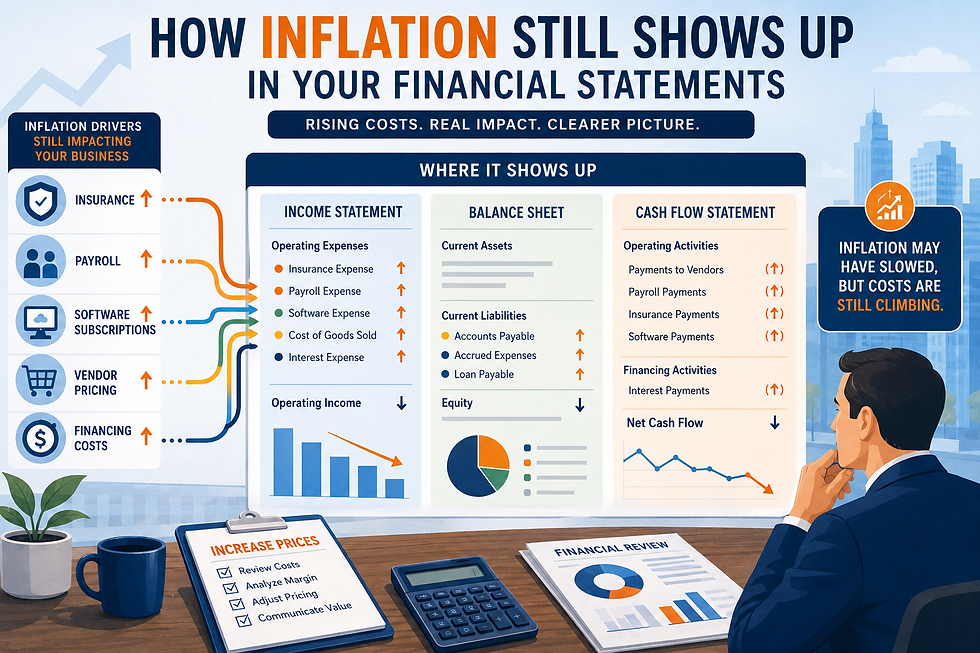
Inflation is no longer making headlines the way it did a few years ago, but that does not mean its impact has disappeared. While overall inflation has moderated compared to its peak, many of the expenses businesses absorb every month remain significantly higher than they were before prices accelerated. Payroll, insurance premiums, software subscriptions, financing costs, and vendor pricing continue placing pressure on profitability, even as inflation has leveled out. According to the U.S. Bureau of Labor Statistics consumer inflation has slowed considerably from its 2022 peak. However, many business input costs remain elevated because prices rarely return to previous levels after periods of sustained inflation.
For business owners this creates an important distinction. A lower inflation rate means prices are increasing more slowly. It does not mean operating costs have declined. Understanding where these increases appear in your financial statements can help you make better decisions about pricing, budgeting and long-term financial planning.
One of the first places inflation appears is in your operating expenses. Insurance renewals, payroll taxes, utilities, software subscriptions, internet services, and professional fees have steadily increased over the past several years. Individually, these expenses may seem manageable. Together, they can create meaningful pressure on operating margins. Comparing this year's operating expenses to the same period last year often reveals increases that are much larger than many owners expected.
Payroll remains one of the largest expenses for service-based businesses, and labor costs continue rising across much of the economy. The National Federation of Independent Business consistently reports that finding qualified workers and managing compensation remain among the biggest concerns for small businesses. Higher wages often become necessary to remain competitive, but increased payroll also affects payroll taxes, retirement contributions, overtime, and employee benefits. These costs appear throughout the Profit and Loss Statement and can significantly reduce net income if pricing has not kept pace.
Vendor pricing continues to influence profitability as well. Suppliers have experienced higher labor expenses, transportation costs, and manufacturing costs over the past several years. While supply chain disruptions have improved compared to previous years, many vendors have maintained higher pricing structures to offset their own operating costs. Businesses that purchase materials, inventory, or outsourced services frequently see these increases reflected in their cost of goods sold or direct operating expenses. Even modest increases from multiple vendors can compress gross profit margins over time.
Software spending has quietly become another area affected by inflation. Many businesses now rely on subscription-based platforms for accounting, payroll, customer relationship management, cybersecurity, and communication. Annual price adjustments have become common across the software industry. Individually, these increases often amount to only a few dollars each month. Across a full technology stack, however, they can add thousands of dollars to annual operating costs. Regular expense reviews help identify subscriptions that continue delivering value and those that no longer support business operations effectively.
Insurance costs have also become a growing concern across many industries. Commercial property insurance, general liability coverage, workers' compensation, and vehicle insurance have all experienced notable increases in recent years. According to industry reports from insurance providers and risk management organizations, rising claim costs, severe weather events, and higher repair expenses have contributed to premium increases nationwide. These higher premiums directly affect operating expenses and reduce overall profitability unless they are offset through stronger pricing or improved operational efficiency.
Businesses carrying debt continue feeling the effects of higher interest rates. Although the Federal Reserve has begun adjusting monetary policy as inflation has eased, borrowing costs remain well above the historically low rates many businesses became accustomed to before 2022. Interest expense on equipment loans, commercial lines of credit, and business financing continues reducing net income for many companies. Businesses considering expansion or capital investments should evaluate financing costs alongside expected returns to ensure those investments remain financially beneficial.
Inflation also affects financial statements through smaller expenses that often receive less attention. Merchant processing fees increase as sales prices rise. Shipping costs fluctuate with fuel prices and labor expenses. Office supplies, maintenance contracts, and professional services all contribute incremental increases that gradually raise the overall cost of doing business. Looking at individual transactions may not reveal a meaningful trend, but comparing expense categories over several reporting periods often tells a different story.
Gross profit margin provides one of the clearest indicators of whether inflation is affecting your business. If direct costs increase while pricing remains unchanged, gross margin begins to decline. A shrinking margin may indicate that vendor increases, labor costs, or production expenses are outpacing revenue growth. Monitoring gross margin monthly allows business owners to identify pricing challenges before they significantly affect profitability.
The Balance Sheet can also reveal inflation's impact. Businesses carrying higher inventory values may require more working capital to maintain the same inventory levels they held several years ago. Larger accounts receivable balances can indicate that customers are taking longer to pay invoices while managing their own cash flow pressures. Reviewing liquidity ratios and working capital trends each month helps determine whether inflation is creating additional strain on available cash.
Financial planning has become increasingly important as businesses continue adapting to higher operating costs. Rather than relying solely on annual budgets, many organizations now use rolling forecasts to evaluate changing expenses and adjust pricing strategies throughout the year. The Association for Financial Professionals continues to recommend dynamic forecasting because it allows businesses to respond more quickly to changing economic conditions. Updating forecasts regularly helps business owners identify potential cash flow challenges before they affect day-to-day operations.
Pricing strategy deserves regular evaluation in an inflationary environment. Many businesses hesitate to adjust prices because of concerns about customer reactions. Delaying pricing reviews for too long can gradually reduce profitability as operating costs continue rising. Financial statements provide objective data that helps determine whether current pricing still supports healthy margins. Businesses that understand their cost structure are better equipped to make informed pricing decisions supported by measurable financial results.
Inflation has become less visible in daily news coverage, but it remains visible in financial reporting. Operating expenses remain elevated, labor continues becoming more expensive, and financing costs still affect many businesses. Business owners who review financial statements consistently can identify these trends early, respond with better planning, and protect profitability before rising costs begin limiting future growth.


Comments